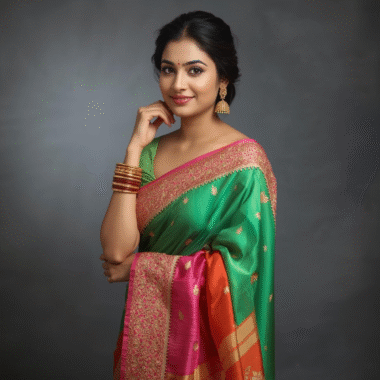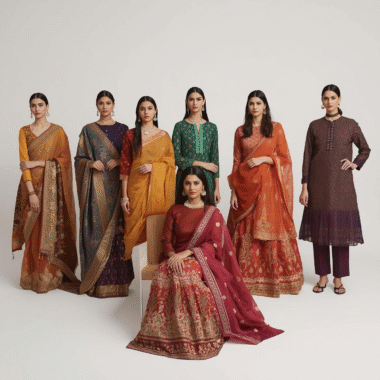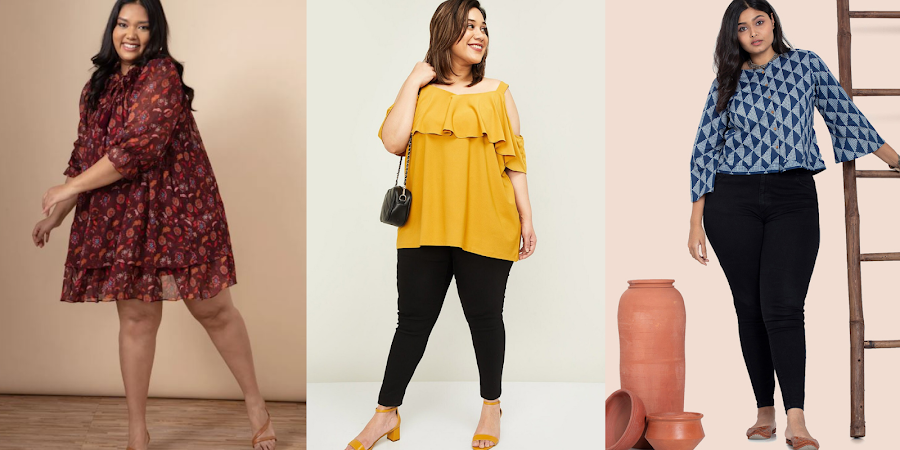
For far too long, the vibrant tapestry of Indian fashion has had a glaring, unspoken gap. If your clothing size falls beyond the standard L or XL, you know this reality all too well. It’s the frustration of walking into a store filled with beautiful clothes, only to find the options stop just as they might have begun for you. It’s the endless online scrolling, filtering by your size—3X, 4X, 5X, 6X—and being met with a handful of dismal, shapeless options, if any at all. It’s the sinking feeling of being an afterthought in a multi-billion dollar industry built on beauty and expression.
This guide is a rejection of that outdated narrative. This is for the woman who deserves to feel gorgeous at a wedding, the man who wants to look sharp for a festival, and everyone in between who believes that style is a birthright, not a privilege reserved for a specific body type. The journey to finding fabulous, well-fitting clothes in extended sizes in India is undeniably challenging, but it is not impossible. The landscape is shifting, and this guide is your map and your manifesto. We will navigate the current market, unlock the secrets of flattering fits, explore styling techniques that celebrate your body, and finally, build a wardrobe that makes you feel confident, powerful, and utterly stylish. Consider this your invitation to claim your space in the world of fashion, exactly as you are.
The first step is to banish the word “fat” from your vocabulary as a negative term and instead, embrace a new language of self-description. Your body is not a problem to be solved; it is your home. Understanding your general body shape is not about conforming to an ideal; it’s about understanding your own architecture to make clothes work for you. Most bodies fall into a few general categories, though most of us are a beautiful blend of a few. The apple shape tends to carry weight around the midsection with slimmer legs and arms. The pear shape carries weight around the hips and thighs with a smaller bust and waist. The hourglass has a defined waist with balanced bust and hips. The rectangle shape has a straighter figure with minimal waist definition.
Why does this matter? Because it allows you to make empowered choices. Knowing your shape helps you identify styles that will make you feel your most confident. For instance, an apple-shaped body might gravitate towards V-necklines and A-line dresses that create definition away from the waist, while a pear-shaped body might use statement sleeves and detailed necklines to draw attention upward, balancing their silhouette. This isn’t about hiding; it’s about highlighting your favorite features and creating a sense of harmonious proportion that feels good to you. The goal is to find clothes that fit your body, not to force your body into clothes that don’t fit it.
Now, let’s tackle the single biggest hurdle: the shopping process itself. The experience of shopping for extended sizes in India can be so discouraging that many people simply give up. The physical retail landscape is often a wasteland of limited options. You might find a small, tucked-away section with a few beige or black kurtas, constructed from poor-quality fabric and featuring designs that haven’t been updated in a decade. The message is clear: “You don’t deserve fashion. You deserve coverage.” This is not only insulting but also bad business. It ignores a massive and eager market of consumers with spending power and a deep desire to participate in trends and wear beautiful clothes.
The online world offers more hope, but it comes with its own set of challenges. The key is to become a savvy digital shopper. Your new best friend is the size chart, but not just any size chart. You must move beyond the standard S-M-L-XL designations, which are meaningless across different brands. You need a detailed size chart that provides garment measurements in inches or centimeters. Arm yourself with a soft measuring tape. Measure your bust, waist, and hips, but also measure a garment you already own and love—a perfect-fitting kurta or a pair of jeans. Compare these measurements directly to the brand’s chart. Look for details: does the brand simply scale up a small-sized pattern, resulting in armholes that are too tight and torsos that are too short? Or do they practice what is known as “grade rule” patterning, where the pattern is specifically drafted for a larger body, ensuring proportional armholes, sleeve lengths, and shoulder seams? This is the difference between something that fits and something that merely contains you.
When analyzing product photos, be critical. Do they only show the garment on a mannequin or a standard-size model? Or does the brand proudly showcase its clothes on a diverse range of models of different sizes? This is a huge indicator of a brand’s commitment to inclusivity. Look for videos where the model turns around, so you can see how the fabric drapes from all angles. Read the reviews relentlessly. Fellow plus-size shoppers are your allies and will often provide invaluable, honest feedback about the fit, fabric quality, and accuracy of the size chart. They will tell you if something runs small, if the fabric is see-through, or if the stitching is poor. This communal knowledge is power.
Let’s talk about the heart of your wardrobe: the fabrics and the fits. Not all fabrics are created equal, and this becomes even more important for extended sizes. You want fabrics that have structure and drape, that skim your body without clinging. Avoid stiff, boxy fabrics that add unnecessary volume, and equally, avoid very thin, flimsy jersey that will cling to every curve. Look for medium-weight cottons, cotton blends with a bit of stretch, sturdy viscose, and quality knits that hold their shape. Embrace Ponte knit—a double-knit fabric that is sturdy, has excellent recovery, and is incredibly forgiving. It’s a miracle fabric for structured dresses and skirts. For traditional wear, look for higher GSM (grams per square meter) cotton that won’t become sheer, and silks or satins with a good lining.
The magic word is drape. You want fabrics that flow and move with you. Georgette, chiffon, and well-draped viscose are excellent for kurtas and Anarkalis because they create beautiful movement without adding bulk. When it comes to fit, the goal is ” tailored,” not “tight.” So many plus-size individuals make the mistake of buying clothes that are too big, thinking it will hide their body. In reality, oversized, shapeless garments often make you look larger. Instead, look for clothes that follow your lines. A seam should sit at your shoulder, not halfway down your arm. A kurta should have a defined waist seam or darting that gives it shape, rather than hanging like a tent. This is where the concept of ” tailored” becomes crucial. Don’t be afraid to find a good tailor. Buying a garment that fits well in the shoulders and bust and then having the waist taken in is a game-changing investment that can make off-the-rack clothes look custom-made.
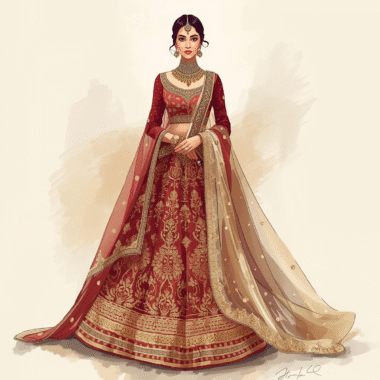
Now, let’s move on to the fun part: building a versatile and stylish wardrobe that works for the myriad occasions of Indian life. Let’s start with the cornerstone of Indian wear: the kurta. For the plus-size woman, a well-chosen kurta is a versatile hero. Avoid very short kurtas that end at the hip, as they can cut the body in an unflattering way. Instead, opt for longer lengths that create a vertical line—knee-length, calf-length, or even ankle-length. Look for kurtas with vertical elements like stripes, vertical seams, or front panels, as these are incredibly lengthening and slimming. A straight-cut or slightly A-line kurta is universally flattering. Embrace interesting necklines—V-necks are fantastic for elongating the torso and drawing the eye up. Boat necks and wide collars can broaden the shoulders, balancing out wider hips.
The beauty of the kurta is its versatility. For a casual day look, pair a solid-colored cotton kurta with well-fitted leggings or jeggings and comfortable sandals or kolhapuris. Add a long necklace to create that vertical line. For a more festive look, choose a kurta in a rich fabric like silk or art silk with intricate embroidery or print. Pair it with a contrasting churidar or palazzo pants. Palazzo pants are a plus-size best friend; their flowy nature balances the top and creates a elegant, comfortable silhouette. When it comes to prints, don’t shy away from them! The old rule that plus-size people should only wear dark solids is outdated and boring. Embrace prints, but be mindful of the scale. Very small, dense prints can sometimes be overwhelming. Medium to large-scale prints, florals, and abstract patterns can be incredibly flattering and stylish.
For men, the path to a great fit follows similar principles. The key is structure and proportion. A well-fitted kurta is essential. It should not be skin-tight, but it should also not be a shapeless sack. Look for kurtas with side slits and a straight cut that allows for movement. The length should be appropriate—not too short, not too long. For a more modern look, men can explore Indo-western fusion. A longer, knee-length kurta worn over a pair of well-fitted trousers or even denim jeans is a sharp, contemporary look. A structured Nehru jacket or a waistcoat worn over a simple kurta can add a layer of sophistication and define the torso, creating a very polished appearance. For bottom wear, avoid overly tight churidars if they are uncomfortable. Straight-cut pyjamas or even well-fitted trousers are excellent alternatives that offer both comfort and style.
The world of Western wear offers another realm of possibilities. The little black dress is a classic for a reason, but it must be the right little black dress. Look for one with structure—perhaps made from that miracle Ponte knit fabric. A dress with a defined waist, either through seaming or a belt, will create an hourglass shape. A-wrap dress is another universally flattering style because you can adjust the waist to your comfort level. Don’t underestimate the power of a great pair of jeans. The search for the perfect jeans can feel like a quest for the Holy Grail, but they are out there. Look for jeans with a good amount of stretch (around 2% elastane) for comfort, but with a thick, sturdy denim that holds its shape. A dark wash is always slimming and versatile. The rise is crucial; a high-rise jean can provide tummy control and sit comfortably at the natural waist, while a mid-rise is a safe bet for most. The cut is everything. While skinny jeans are popular, don’t feel pressured into them if they don’t make you feel good. Bootcut, straight-leg, or even a slight flare can balance out curves beautifully and are very much on-trend.
The final, and perhaps most important, layer of your outfit is confidence. It is the ultimate accessory. It sounds cliché, but it’s true: the way you carry yourself transforms an outfit. Stand tall. Wear your clothes; don’t let them wear you. This confidence often comes from within, but it can be nurtured by making style choices that make you feel good, not choices you think you should make based on outdated rules. Wear the color you love, even if it’s bright yellow. Try the trend you’ve been curious about, whether it’s statement sleeves or a bold print. Your style is a form of self-expression, and your body is the canvas. The most stylish person in any room is not the one wearing the most expensive clothes; it is the one who looks comfortable, happy, and authentically themselves.
The Indian fashion landscape is slowly, finally, beginning to change. A new wave of designers and brands is emerging with a focus on inclusivity. They are not just adding larger sizes as an afterthought; they are building their entire design philosophy around the plus-size consumer. They understand that a larger body has different proportions and are creating patterns specifically for them. They are using models of all sizes in their marketing campaigns, sending a powerful message: “We see you. We value you. We designed this for you.” This shift is being driven by consumers who are demanding better, who are using their voices and their wallets to support brands that celebrate diversity.
This guide is a starting point, a toolkit to equip you for your sartorial journey. Remember that your worth is not determined by a clothing size. You deserve to feel beautiful, to experience the joy of wearing a fabulous outfit, and to participate fully in the world of fashion. It is your right. It may require a bit more patience, a bit more research, and a willingness to advocate for yourself, but the destination—a wardrobe that makes you feel confident and celebrated—is worth the journey.
Your search for a brand that understands this journey ends here. At Kapradekho.com, our mission is built on the foundation of inclusive fashion. We believe that style has no size limit. Our collection is meticulously curated for the modern Indian consumer who wears extended sizes. We focus on designs that are trendy, not frumpy. We prioritize fabrics that drape beautifully and are comfortable for all-day wear. Most importantly, we ensure our patterns are graded specifically for larger bodies, providing a fit that is proportional and flattering—not just a scaled-up version of a smaller size. We offer detailed size charts with garment measurements and encourage you to find your perfect fit. We are committed to being a destination where you can finally find the clothing you deserve for every occasion—be it a wedding, a festival, or everyday wear. Explore our collection and rediscover the joy of dressing up.