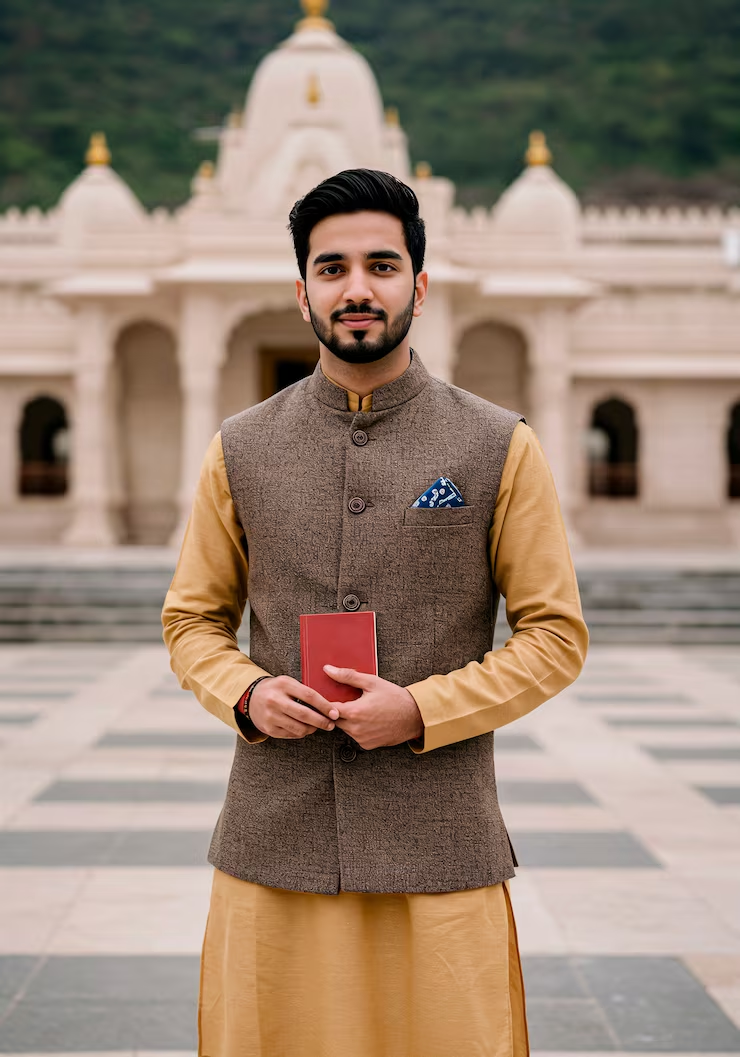
The kurta is more than just a garment; it’s a narrative woven into the very fabric of Indian culture. From the regal courts of ancient empires to the bustling streets of modern metropolises, the kurta has stood the test of time, evolving from traditional attire to a global fashion statement. It embodies a unique blend of comfort, elegance, and identity, making it an indispensable part of every Indian man’s wardrobe.
Yet, with this incredible variety comes a common dilemma. Choosing the right kurta—whether for a grand wedding, a festive celebration, or a casual day out—can feel daunting. Is a Pathani too formal? Will linen work for a night event? How do you even tie that stole?
This is where we come in. Welcome to your definitive, comprehensive guide to men’s kurtas in India. This article is designed to be your go-to resource, demystifying everything from historical origins and fabric choices to mastering the art of styling and accessorizing. At Kapradekho.com, we believe that fashion is a form of self-expression, and our curated collection is designed to help you find the perfect kurta that doesn’t just fit your body, but also your personality and occasion. Let’s embark on this sartorial journey together.
A Brief History of the Kurta: From Royal Courts to Modern Wardrobes
To truly appreciate the kurta, one must understand its rich history, which is as layered and intricate as the garment itself.
The Kurta in the 20th Century
The 20th century saw the kurta transform from royal wear to a symbol of national identity. During the Indian independence movement, leaders like Mahatma Gandhi consciously adopted the kurta and dhoti, hand-spun from Khadi, as a powerful political statement against British colonial rule and mill-made cloth. It became a uniform of dissent, representing self-reliance and Indian heritage. Post-independence, Bollywood became the primary driver of the kurta’s popularity. From the simple white kurtas of Raj Kapoor to the flamboyant and colorful styles sported by Amitabh Bachchan in the 70s and 80s, cinema dictated trends. Different regional styles also gained national recognition, such as the Hyderabadi sherwani and the Lucknowi chikan work kurta.
Ancient Origins and Evolution
The kurta’s origins are often traced back to the nomadic Indo-Aryan tribes of the Indian subcontinent. However, its most significant evolution occurred during the Mughal era. The Mughals, with their Central Asian roots, brought with them influences from Persian and Turkic cultures. They introduced longer, more structured tunics, which blended seamlessly with the local attire of the time, primarily the shorter kurta and the dhoti. This fusion gave birth to the longer, knee-to-calf-length kurta we recognize today. It was initially a garment of the aristocracy, adorned with intricate zari and zardozi work, symbolizing wealth and status. The fine muslin and cotton versions were worn in the summer, while silk and woolen kurtas provided warmth during the winter months.
The Modern Kurta: A Global Fashion Statement
Today, the kurta has shattered all stylistic boundaries. Contemporary Indian designers like Sabyasachi Mukherjee, Rohit Bal, and Manish Malhotra have been instrumental in reinventing the kurta, presenting it on international runways and making it a red-carpet favourite. The modern kurta is a canvas for experimentation—with asymmetrical hems, bold prints, minimalist cuts, and fusion elements like collars and pockets. It’s no longer confined to traditional events; it’s worn by global icons as a symbol of eclectic, sophisticated style. This journey from the royal courts to the global stage is a testament to the kurta’s timeless appeal and incredible adaptability.
Understanding Different Kurta Styles: Finding Your Perfect Fit
The term “kurta” encompasses a wide array of styles. Understanding these variations is the first step to building a versatile ethnic wardrobe.
The Classic Straight Cut Kurta
This is the most ubiquitous and versatile style. As the name suggests, it features a straight, relaxed silhouette from the shoulders to the hem. It typically has a straight neckline (keyhole or mandarin) and side slits for ease of movement.
- Best For: All body types. Its simplicity is its strength.
- Occasions: Incredibly versatile. Perfect for daily wear, casual outings, office (in a minimalistic design), and even semi-formal events when made from a richer fabric.
- Styling Tip: For a lean look, avoid a baggy fit. Aim for a kurta that skims your body without being too tight.
The Pathani Kurta (or Khan Dress)
Originating from the Pashtun region (hence the name), this style is characterized by its longer length (often reaching mid-calf or lower), a fuller body, and deeper side slits. It frequently features elaborate embroidery on the chest and cuffs and may have a buttoned placket.
- Best For: Taller individuals can carry the length well. It offers a majestic, imposing silhouette.
- Occasions: Ideal for festive occasions like Eid, weddings (as a guest), and religious gatherings. It commands attention.
- Styling Tip: Pair it with a matching shalwar or straight-fit pants. A waistcoat can add another layer of sophistication.
The Angrakha Kurta
Steeped in history, the Angrakha (meaning “body protector”) was originally a warrior’s garment. Its defining feature is the overlapping front panels, which are tied together with strings (tassels) or fastened with buttons. This style is inherently regal and dramatic.
- Best For: Most body types. The overlapping panel can be very flattering, creating a V-shaped torso.
- Occasions: Weddings, parties, and festive celebrations. It’s a statement piece.
- Styling Tip: Keep the focus on the unique closure. Pair it with simple, solid-colored bottom wear to let the kurta be the star.
The Sherwani: The King of Formal Wear
The sherwani is the epitome of Indian formal wear. It is a long coat-like garment, usually buttoned from the neckline to the hem, and is worn over a kurta and churidar or pajama. It is distinguished by its tailored fit, often featuring heavy embroidery, brocade work, and luxurious fabrics like silk and velvet.
- Best For: Everyone, especially grooms! It is designed to be tailored to perfection.
- Occasions: Primarily weddings (especially for the groom and close family), state dinners, and extremely formal events.
- Styling Tip: Fit is paramount. A well-tailored sherwani accentuates the shoulders and tapers at the waist, creating a powerful, elegant silhouette.
Indo-Western and Fusion Kurtas
This is where modern fashion truly meets tradition. Fusion kurtas break conventional rules. Think kurtas with shirt-style collars (bandhgala or point collar), yokes, patch pockets, asymmetrical hems, or even denim fabric. They often have a slimmer, more contemporary fit.
- Best For: The fashion-forward man who likes to experiment.
- Occasions: Casual parties, dinners, college events, and creative workplaces.
- Styling Tip: Embrace the fusion theme fully. Pair a collared kurta with well-fitted jeans or tailored trousers and loafers or sneakers.
Kurta with Jacket: Layered Elegance
This isn’t so much a style of kurta as it is a styling essential. Adding a jacket over a simple kurta instantly elevates the entire look. The jacket could be a sleek Nehru jacket, a embroidered waistcoat (bandi), or a longer overcoat-style jacket.
- Best For: Adding depth and dimension to an outfit.
- Occasions: Perfect for shifting a day look to an evening look, or for adding formality to a simple kurta for a wedding or party.
- Styling Tip: Ensure the jacket complements the kurta but doesn’t perfectly match it. Contrasting colors or textures (e.g., a silk jacket over a cotton kurta) create a more fashion-conscious look.
A Fabric for Every Season: Choosing the Right Material
The fabric of your kurta determines not only its comfort and suitability for the weather but also its overall look and formality.
Summer Breathers: Cotton and Linen
When the Indian summer is at its peak, breathability is key.
- Cotton: The undisputed king of summer fabrics. It is soft, absorbent, and allows your skin to breathe. Look for varieties like:
- Khadi: Hand-spun and hand-woven, it has a unique texture and is a sustainable choice.
- Mulmul: A incredibly soft, fine, and lightweight muslin cotton, perfect for extreme heat.
- Handloom Cotton: Supports artisan communities and offers unique weaves like Kota Doria or Mangalagiri.
- Linen: Made from the flax plant, linen is highly breathable and has a distinctive, slightly coarse texture that lends a rustic, sophisticated elegance. It wrinkles easily, but that is part of its charm.
Winter Warmers: Silk, Wool, and Velvet
For winter weddings and festive seasons, you need fabrics that provide warmth and a touch of luxury.
- Silk: Synonymous with opulence. Different types offer different looks:
- Raw Silk: Has a nubby texture and a matte finish, offering a subdued, elegant richness.
- Banarasi Silk: Heavy, luxurious, and famed for its intricate gold and silver brocade work. Ideal for grooms.
- Tussar Silk: Has a rich texture and a natural goldish hue, less shiny than pure silk.
- Velvet: A plush, nap-pile fabric that is incredibly regal. It’s heavy and best suited for formal evening events in cooler weather.
- Wool & Blends: For very cold climates, woolen kurtas or wool-blend fabrics are practical and warm.
All-Rounders: Rayon, Modal, and Georgette
These are popular choices for their drape, affordability, and ease of maintenance.
- Rayon: Made from wood pulp, it drapes beautifully, feels soft like silk, and is much more affordable. Great for casual and party wear kurtas.
- Modal: A type of rayon that is even softer and more breathable. It’s resistant to shrinking and fading.
- Georgette: A sheer, lightweight fabric with a crinkly texture and a slight stretch. It’s often used for layered kurtas or for a flowy, elegant look.
The Art of Embroidery and Workmanship
The fabric is the canvas, and the embroidery is the art.
- Chikankari: A delicate and intricate shadow-work embroidery from Lucknow. Traditionally done on white muslin, it is elegant and perfect for day events and summers.
- Zari/Zardozi: The art of weaving gold and silver threads (or their synthetic equivalents) into the fabric. It is heavy, lavish, and used for grand occasion wear like sherwanis.
- Ari/Phulkari: Other regional embroideries that add unique character and color to a kurta.
The Art of Styling: How to Wear Your Kurta for Any Occasion
Now for the practical application: how to put it all together for specific events.
The Wedding Guest Look
- Objective: Look celebratory and respectful without overshadowing the main party.
- Fabrics: Opt for rich fabrics like Silk, Velvet, or heavy Cotton Silk.
- Styles: A well-embroidered Angrakha, a stylish Pathani, or a sharp Sherwani (if appropriate).
- Bottoms: Pair with a perfectly fitted Churidar or tailored parallel trousers.
- Accessories: This is the time to go all out. Choose embellished Mojris, a stylish stole (draped over one shoulder), and perhaps a statement ring or bracelet. A classic watch works well.
- Kapradekho Picks: Explore our [Wedding Wear Collection] for curated options.
The Festive Celebration Look (Diwali, Eid, Durga Puja)
- Objective: Joyful, vibrant, and traditional.
- Fabrics: Cotton Silk, Rayon, or high-quality embroidered Cotton.
- Styles: A straight-cut or Pathani kurta with festive embroidery or prints.
- *Bottoms: Churidar or straight-fit pyjamas.
- Accessories: Kolhapuri sandals or Juttis. A simpler stole if desired. Think color and celebration.
- Kapradekho Picks: Our [Festive Collection] is filled with colorful and celebratory designs.
The Casual & Everyday Look
- Objective: Comfort and understated style.
- Fabrics: Cotton, Linen, or Modal.
- Styles: A simple straight-cut kurta with minimal to no embroidery. Indo-western styles with collars are also great.
- Bottoms: This is where you can experiment. Pair with jeans, cotton pyjamas, or even tailored shorts for a very contemporary vibe.
- Accessories: Stick to comfortable sandals or sneakers. Avoid a stole for a truly casual look.
- Kapradekho Picks: Browse our [Everyday Essentials] for comfortable and stylish options.
The Office Wear Look (Smart Ethnic)
- Objective: Professional, polished, and comfortable.
- Fabrics: Crisp Cotton, Linen-blends, or fine Modal.
- Styles: A tailored straight-cut kurta, often with a shirt-style collar (bandhgala). The fit should be neat, not baggy. Stick to solid colors or very subtle prints.
- Bottoms: Well-fitted, flat-front trousers in a complementary color.
- Accessories: A leather watch and perhaps a leather folio. Footwear should be clean loafers or derbies. Avoid traditional footwear in a formal corporate setting.
- Kapradekho Picks: Our [Smart Ethnic Wear] range is designed for the modern professional.
Mastering the Details: Bottoms, Footwear, and Accessories
The devil is in the details, and they can make or break your look.
Choosing Your Bottom Wear: Pyjama, Churidar, or Dhoti?
- Churidar: The most common choice for formal and semi-formal wear. It is a tightly fitted trouser that gathers at the ankle (“churis” meaning bangles). It creates a clean, streamlined silhouette.
- Pyjama/Shalwar: Loose and comfortable, these are gathered at the waist and ankles. They offer a more traditional, relaxed look. Great for everyday wear and festive occasions.
- Dhoti: The traditional draped garment. It makes a bold, fashion-forward statement and is typically reserved for very traditional events or high-fashion contexts.
- Jeans/Trousers: The modern fusion option. Dark, well-fitted jeans or chinos can work brilliantly with a shorter, contemporary kurta for a casual outing.
Footwear to Complement Your Look
- Mojris/Juttis: The classic ethnic footwear. Elaborately embroidered ones for weddings, simpler ones for casual wear. They are the safest and most traditional bet.
- Kolhapuri Sandals: Leather sandals with a distinctive rustic look. Perfect for adding a bohemian touch to a casual cotton kurta.
- Sandals: Simple leather or synthetic sandals work well for everyday, errand-running comfort.
- Loafers/Derbies: For the smart ethnic or fusion look, a clean pair of leather loafers is impeccable.
- Pro Tip: Avoid formal black oxford shoes with a kurta; the style clash is often too severe.
Essential Accessories: The Final Touch
- The Stole/Dupatta: Don’t be afraid of it. The simplest way is to drape it over one shoulder and let it hang. For a more secure style, you can fold it neatly and place it over both shoulders. For a Pathani, sometimes a longer, thinner stole is worn around the neck.
- Headgear: A Safa or Pagdi is a magnificent accessory for a wedding, adding immense royalty to your ensemble.
- Jewellery: Less is often more. A single string of beads (mina), a silver bracelet, or a statement ring can be enough. The key is to not look overly accessorized.
Kurta Care 101: How to Make Your Kurta Last Longer
Investing in good kurtas means taking care of them.
- Washing: Always check the label. As a rule of thumb:
- Cotton/Linen: Can usually be machine washed on a gentle cycle in cold water. Turn embroidered pieces inside out.
- Silk/Velvet/Heavily Embroidered: DRY CLEAN ONLY. Hand washing can ruin the fabric and embroidery.
- Rayon/Georgette: Hand wash in cold water with a mild detergent. Do not wring; instead, roll it in a towel to absorb excess water and dry in the shade.
- Ironing: Iron on the reverse side, especially for embroidered garments. Use the appropriate heat setting for the fabric (low for silk, high for cotton).
- Storage: Do not hang heavy sherwanis or embroidered kurtas for long periods as the hanger can distort the shoulders. Fold them neatly and store in a cool, dry place. Use cedar balls or neem leaves to protect against moths instead of harsh chemical mothballs.
Finding the Perfect Fit: A Size Guide for Men
A poorly fitted kurta can ruin the most elegant outfit. Here’s what to look for:
- Shoulders: The seam of the kurta should sit right at the edge of your shoulder bone.
- Chest: The kurta should allow for easy movement without being too loose. You should be able to pinch about 2-3 inches of fabric on either side of your chest.
- Length: This is subjective based on style. A classic kurta should fall mid-thigh to just above the knee. A Pathani will be longer. The hem should be even all around.
- Sleeves: The cuff should end at your wrist bone.
For precise measurements, please refer to our detailed [Kapradekho.com Size Guide] to ensure you get the perfect fit every time.
Conclusion: Embrace Your Style with Confidence
The kurta is a testament to the enduring elegance of Indian fashion. It is a garment that respects tradition while embracing modernity, offering endless possibilities for self-expression. Whether you’re the groom at a grand wedding, a guest at a festive celebration, or simply enjoying a relaxed day out, there is a kurta that is perfect for you.
The key is to understand the language of styles, fabrics, and occasion-wear, and then to wear it with confidence. Don’t be afraid to mix and match, to try a new style, or to put your own spin on a classic look.
Ready to find your perfect kurta and write your own style story? Explore our meticulously curated collection of men’s kurtas at Kapradekho.com. We offer a diverse range of premium fabrics, authentic craftsmanship, and contemporary designs for every occasion and every man. From the regal sherwani to the comfortable everyday kurta, we are your destination for authentic Indian style.
Shop the collection now and express your unique identity with confidence and pride!