1. Introduction: Clothes and Culture — Legal Status of Dressing Choices
Legal status of dressing choices is not just a dry legal topic — it’s deeply human. At its core, the way we dress reflects who we are, our beliefs, our identity, and our connection to culture. Yet many countries place restrictions—overt or implicit—on what people may wear. In this article, we’ll dive into how law, culture, and rights intersect over clothing choices, and what protections exist (or should exist) for individual expression.
2. Why Dress Matters: Culture, Identity & Expression
Clothing is never neutral. It can signal:
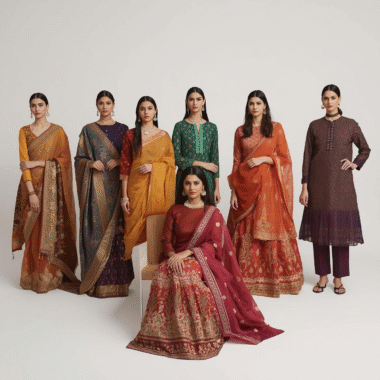
- Cultural belonging or heritage (e.g., traditional garb, national dress)
- Religious affiliation (headscarves, turbans, kippahs)
- Gender or identity expression (cross-dressing, nonbinary clothing)
- Social and political stance (e.g., protest T-shirts, uniform rejection)
Dress codes and restrictions often function as tools of control: to enforce conformity, suppress dissent, or uphold dominant cultural norms. As a Stanford scholar notes, dress codes mirror power relations and social change. Stanford News
When the law intervenes in dress, it touches freedom, dignity, and personal autonomy.
3. Historical Roots: Sumptuary Laws & Early Dress Regulation
Across centuries, societies have regulated who may wear what. These sumptuary laws (laws limiting consumption) were common in Europe, Asia, and beyond: only nobles could wear certain fabrics or colors, or wear jewelry beyond a prescribed limit.
These laws helped fix social hierarchies and prevent “excessive luxury.” Over time, most were repealed or ignored, but the impulse to police dress remains in modern forms: through moral norms, religious codes, or public decency laws.
4. Global Examples: Legal Status of Dressing Choices Around the World
Let’s explore how different jurisdictions treat the legal status of dressing choices — both encouraging freedom and enforcing limits.
4.1 Europe & Secularism
France’s law banning conspicuous religious symbols in public schools (2004) is widely known: students cannot wear visible hijabs, crosses, or other religious garb in public (state) schools.
In 2023, France moved to ban long, flowing dresses like abayas in state schools, citing secularism principles.
Those laws raise intense debate: are they neutral secular regulations or discriminatory measures that target minority communities?
4.2 Middle East & Islamicate Norms
Many Middle Eastern countries enforce modesty laws—mandatory abayas, bans on “revealing” clothing, strict gender separation in dress. In Saudi Arabia, dress standards are strictly enforced, especially for women.
These rules are often framed as religious, moral, or public decency standards.
4.3 South Asia & India
India offers a complex battleground for dressing rights. In many places, there is no explicit protection of dressing choice.
One flashpoint has been the hijab bans in Karnataka schools (2022). Some colleges refused attendance to women wearing hijab; courts upheld bans in institutions prescribing uniforms, saying hijab is non-essential in Islam.
However, advocates argue that wearing clothing—including hijab—is a form of self-expression protected under free speech (Article 19(1)(a)) and religious freedom.
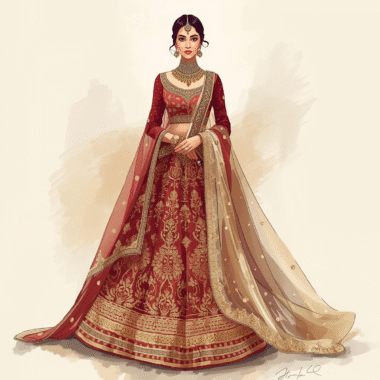
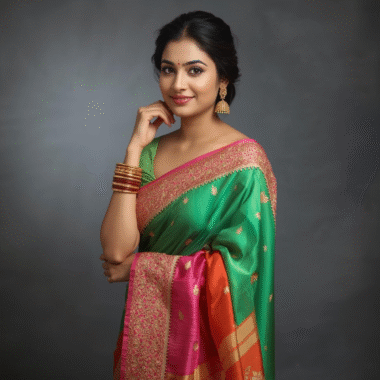
India also saw a curious legal judgment: a woman forced by her husband to wear a sari (instead of kurta and jeans) was granted divorce as cruelty.
4.4 Africa & Public Order Acts
In Sudan, under Public Order Laws (later repealed in part), women wearing trousers were punished—lashes or fines—for “indecent outfits.”
Across Uganda and elsewhere, “miniskirt bans” enforce standards of modesty: women may be shamed or penalized for revealing legs.
4.5 Cross-dressing, Gender Expression & Legal Challenges
Historically, many countries had laws against cross-dressing or appearing in “men’s clothes” or “women’s clothes.” Wikipedia
Even today, 13 UN member states explicitly criminalize transgender individuals or restrict gender expression through cross-dressing laws.
These laws often operate under vague provisions like “public indecency” or “offending public morals.”
5. Legal Doctrines Protecting Dress Choice
If someone claims the legal status of dressing choices should favor freedom, on what legal bases can they build that claim?
5.1 Freedom of Expression & Dress
Courts in some countries see dress as a form of expression. If wearing a garment conveys a message or identity, restrictions must pass strict scrutiny. In India, some argue dress should fall under Article 19(1)(a) (free speech).
Yet courts have not universally accepted this extension.
5.2 Religious Freedom & Dress
For believers, dress is part of manifesting religion. International human rights law says states may restrict manifestations only if:
- Prescribed by law
- Pursue a legitimate aim (public order, safety, morals)
- Are necessary and proportionate. Amnesty International
Thus, a ban on religious headgear must show necessity and narrow scope; a blanket prohibition is often unlawful.
5.3 Anti-Discrimination & Employment Dress Codes
In employment, rules applying differently for men and women (e.g. women must wear skirts) risk violating sex discrimination laws (as under U.S. Title VII). Tulane+1
Also, religious accommodations must be made unless undue hardship occurs. Tulane+1
So dress codes must avoid indirect biases, gender stereotyping, or discriminatory impact.
6. Limits & “Reasonable Restrictions” on Dressing
No country grants unlimited license to dress however one wishes. Common limits include:
- Public decency / morality laws
- Security needs (e.g. face masks or full concealment)
- Uniform codes in institutions (schools, courts)
- Protection of others’ rights (blocking hate symbols)
Restrictions must meet proportionality: the means chosen must be necessary and minimal.
7. Recent Case Studies & Landmark Judgments
- Aishat Shifa v State of Karnataka (2022): Split verdict on hijab ban in educational institutions. One judge held it protected expression, another upheld uniform rules. A larger bench must decide. Hindustan Times
- France’s abaya ban in schools (2023): Schools sent home dozens of girls for refusing to remove long dresses, sparking human rights complaints. Wikipedia
- Sudan’s repeal of Article 152 (2019): The public order law punishing trousers was repealed during democratic transitions. Wikipedia+1
These show both the tension and the evolving legal landscape.
8. Strategies for Reform & Advocacy
To strengthen protections around the legal status of dressing choices, advocates and policymakers can:
- Push for explicit legal guarantees — constitutional or statutory rights to dress freely.
- Frame dress as expression (not just religion or culture).
- Challenge discriminatory codes in courts (unequal enforcement, gender bias).
- Educate public & institutions about diversity in dress norms.
- Use international human rights norms (e.g. UN treaties) to pressure state compliance.
- Document abuses (school exclusions, workplace punishments) to build evidence.
Change often begins at grassroots, but legal backing is essential to sustain it.
9. Conclusion: Upholding the Right to Dress
The legal status of dressing choices remains contested worldwide. While dress seems superficial to some, for many it is profound: identity, belief, pride. When the law intervenes—explicitly or implicitly—it can elevate or suppress dignity.
We must guard against rules that reduce people to uniformity, and champion laws that affirm diversity and freedom thread by thread.
10. Call to Action
If you believe clothing should not be criminalized—or that nobody should face exclusion for what they wear—join the conversation. Share this article, explore local laws, support organizations advocating dress rights, and demand reforms that protect individual dignity.
Let your voice and style be part of lasting change.