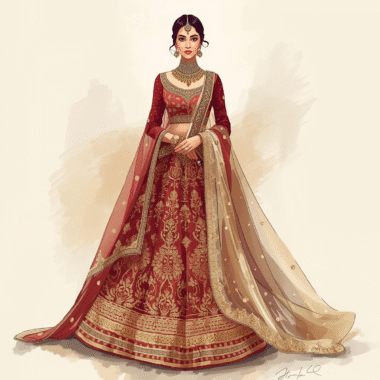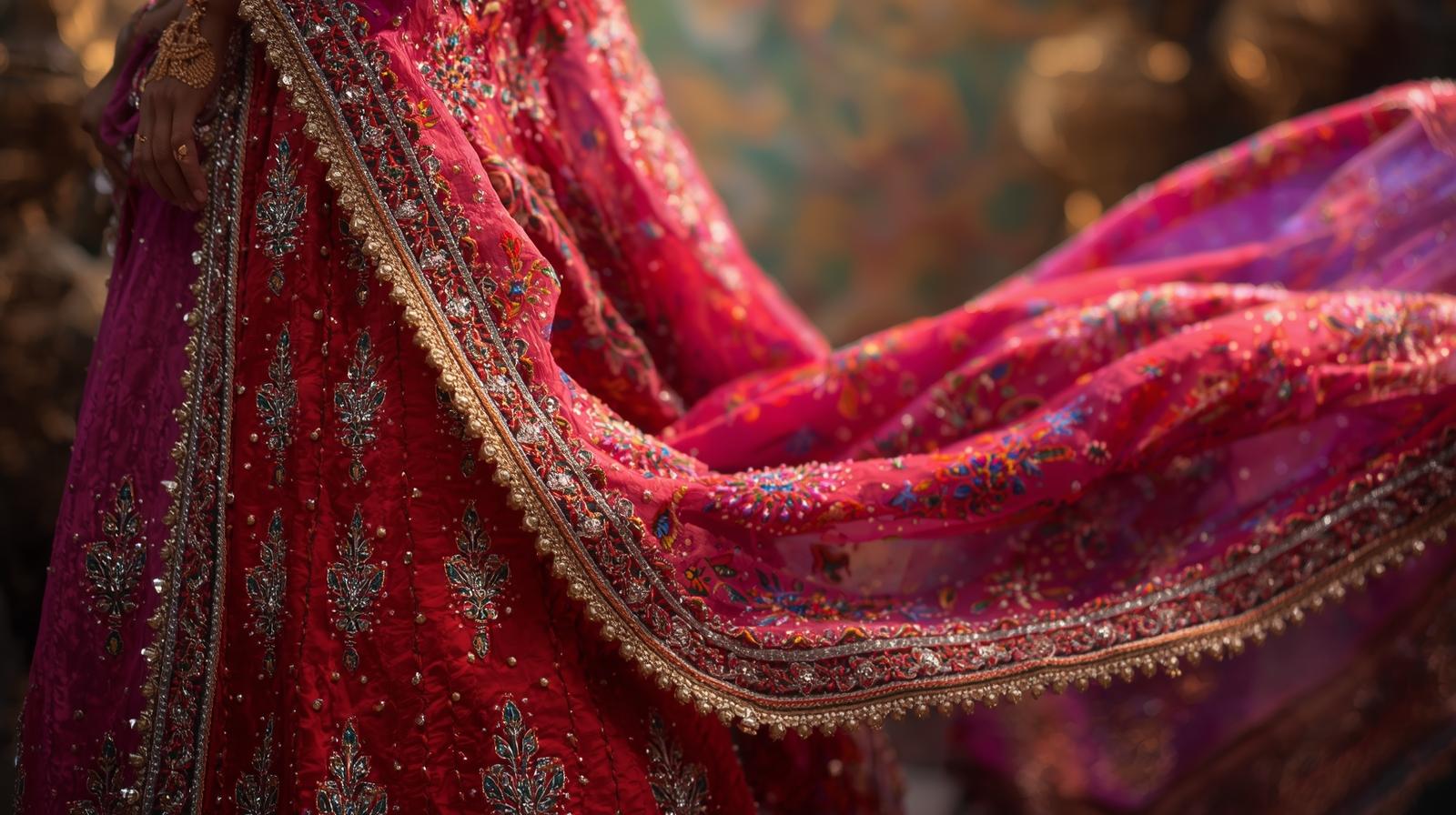
The Rajputi Poshak is far more than just an outfit; it is a powerful emblem of identity, heritage, and grace for the women of the Rajput community in Rajasthan, India . This traditional attire, with its regal bearing and exquisite craftsmanship, carries centuries of history and continues to be a cherished part of celebrations and daily life .
What is a Rajputi Poshak? The Four Key Components
The word “Poshak” simply means “attire” in Hindi, but the Rajputi Poshak is a distinct four-piece ensemble . Each component has a specific name and purpose, coming together to create its iconic, graceful silhouette .
A Tapestry of Craftsmanship: Fabrics and Embellishments
The beauty of a Rajputi Poshak lies in its intricate details. The choice of fabric and embroidery transforms the ensemble from a daily wear garment into a piece of art suitable for royalty.
- Fabrics: The most commonly used fabrics are chosen for their comfort and luxurious feel. These include pure georgette, chiffon, crepe, satin, and silk . For daily wear, simpler cotton poshaks are also preferred .
- Embellishments: The embroidery on a Rajputi Poshak is what makes it truly spectacular . Some of the most renowned techniques include:
- Gota Patti: This craft, originating in Rajasthan, involves applying small pieces of gold or silver ribbon (zari) onto the fabric to create intricate, shimmering patterns .
- Zari and Zardozi: These use metallic threads—sometimes made of gold or silver—to create elaborate and opulent designs, often studded with pearls and precious stones .
- Kundan: This ancient form of stone setting uses highly refined gold to hold precious stones in place on the fabric, lending a regal and resplendent look .
Cultural Significance: More Than Just Clothing
The Rajputi Poshak is deeply woven into the social and cultural fabric of Rajasthan .
- Symbol of Identity: For many Rajput women, wearing the Poshak is non-negotiable, especially after marriage. It is a visible marker of their community, marital status, and pride . It defines who they are .
- Occasions and Festivals: While simpler versions are worn daily, heavily embroidered poshaks are brought out for grand celebrations . They are the quintessential attire for festivals like Teej and Gangor . For a Rajput bride, the Poshak is the only ensemble she will ever wear on her wedding day, symbolizing festivity and tradition .
- Color Symbolism: Colors are chosen with meaning. Red, pink, and orange are considered auspicious for married women and are especially popular for bridal wear . A pearl-pink shade called motia is believed to have a cooling effect . Other vibrant colors like royal blue, maroon, and green are also common .
The Rajputi Poshak Today: A Timeless Legacy
Despite the onslaught of modern fashion, the Rajputi Poshak has retained its essence . Contemporary designers are creating modern adaptations with new color combinations, lighter fabrics, and fusion cuts, making it appealing to younger generations while preserving its traditional soul . It has even graced international runways, showcasing India’s rich cultural tapestry to the world .
From its historical roots in the royal courts of Rajasthan to its enduring presence in modern celebrations, the Rajputi Poshak remains a breathtaking testament to the region’s royal legacy and the timeless elegance of its women .
I hope this gives you a wonderful overview of the Rajputi Poshak. Would you be interested in learning more about the specific jewelry, like the borla or kundan sets, that traditionally accompany this attire?